Cinema has always been about creating immersive experiences—stories that feel larger than life. As filmmaking and projection technologies evolve, audience expectations have grown significantly. One of the most critical advancements driving this evolution is High Dynamic Range (HDR). Today, HDR support in cinema screens is no longer a luxury—it is a necessity.
Understanding High Dynamic Range (HDR) in Visual Media
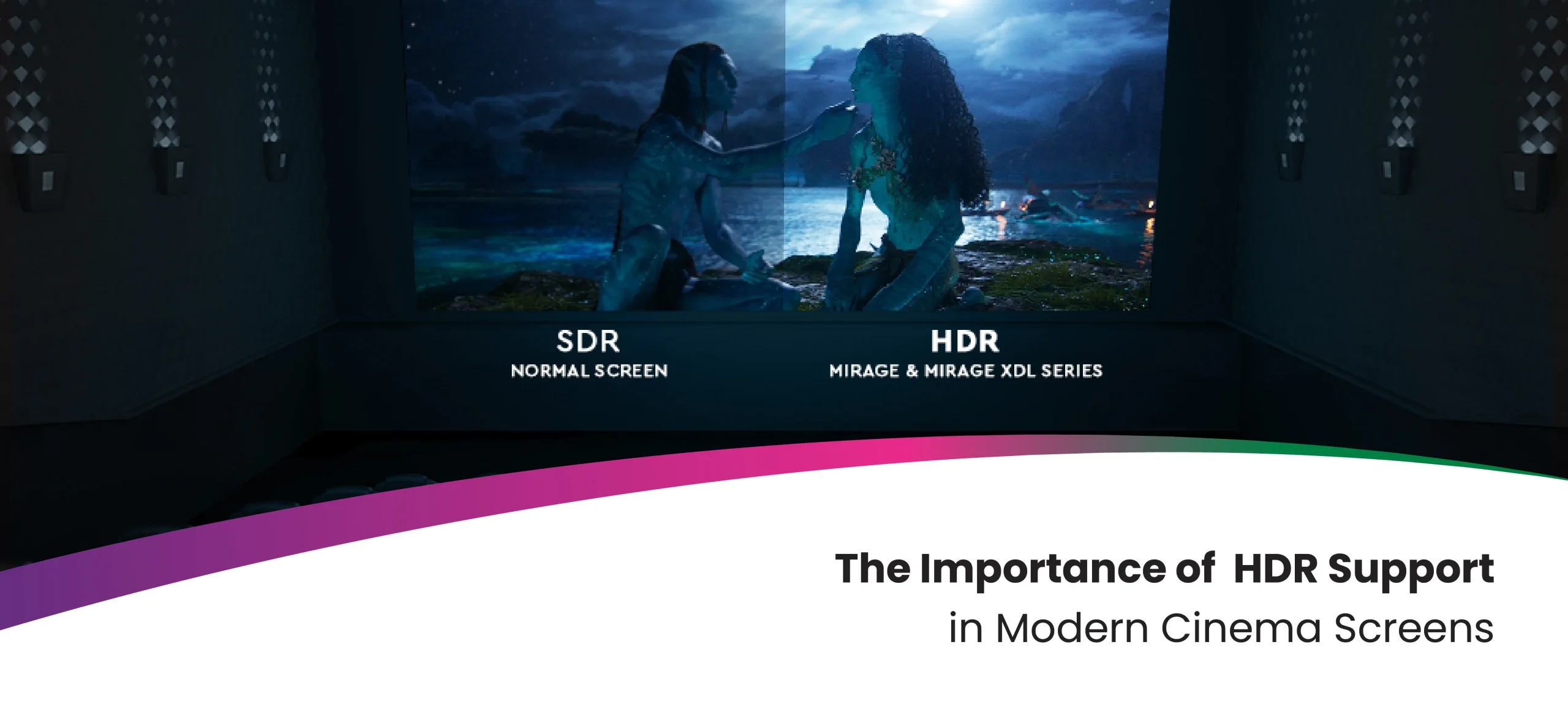
High Dynamic Range (HDR) refers to a technology that enhances the contrast ratio, brightness levels, and color accuracy of visual content. Unlike Standard Dynamic Range (SDR), HDR allows viewers to experience deeper blacks, brighter highlights, and a far wider spectrum of colors.
In cinema, HDR ensures that every detail—whether in a dimly lit night scene or a high-brightness action sequence—is displayed exactly as intended by filmmakers. Shadow details remain intact, highlights are controlled, and visuals feel more natural and immersive.
Benefits of HDR Support in Cinema Screenings
HDR-supported cinema screens elevate the viewing experience in multiple ways:
- Higher Contrast and Image Depth
HDR enables a stronger distinction between light and dark areas, resulting in richer, more lifelike visuals. - Improved Color Accuracy
A wider color gamut ensures vibrant, true-to-life colors without oversaturation. - Enhanced Detail Visibility
Fine details in both shadows and highlights are preserved, improving overall image clarity. - Consistent Premium Experience
HDR screens maintain uniform brightness and contrast across the entire screen surface, ensuring visual consistency from every seat.
For cinema owners, HDR is a key differentiator that directly impacts audience satisfaction and repeat footfall.
How Mirage 2.7 Supports HDR Content – An HDR Success Story
Galalite’s Mirage 2.7 cinema screen is purpose-built to meet the demanding requirements of modern HDR projection. With high-gain performance and optimized surface technology, Mirage 2.7 delivers enhanced brightness and superior contrast—both essential for HDR content.
A notable example is Melody Theatre in Vizag, India’s first cinema to integrate a Barco LS4K HDR projector. To fully leverage this advanced projector, the theatre selected Mirage 2.7 with Lensray Technology, which ensures centre-to-edge brightness uniformity and eliminates hotspots. The screen’s high-gain silver coating further enhances light reflection, allowing the HDR projector’s luminance and contrast to be displayed with precision.
The result was India’s first HDR cinema experience, with sharper, brighter visuals, improved contrast, uniform picture quality across the auditorium, and more natural color reproduction. This case highlights how Mirage 2.7 supports HDR projection and transforms it into a truly immersive audience experience.
The Role of Lensray Technology
A key contributor to HDR performance in Galalite screens is Lensray Technology. This advanced optical innovation precisely manages light reflection and dispersion across the screen surface. By directing more light towards the audience and reducing unwanted scatter, Lensray Technology enhances brightness, uniformity, contrast perception, and image sharpness—making HDR visuals more impactful and immersive.
HDR-Supported Screens vs. Non-HDR Screens
The difference between HDR-supported and non-HDR cinema screens is immediately noticeable:
| Aspect | HDR-Supported Screens | Non-HDR Screens |
|---|---|---|
| Contrast | Deep blacks and bright highlights | Limited contrast range |
| Color Reproduction | Wider and more accurate color gamut | Muted or compressed colors |
| Detail Retention | Clear details in extreme lighting | Loss of detail |
| Audience Experience | Immersive and premium | Flat and less engaging |
As HDR content becomes mainstream, non-HDR screens struggle to meet modern cinematic standards.
The Future of HDR Cinema and Galalite’s Readiness
HDR is rapidly becoming the benchmark for cinematic presentation. As filmmakers increasingly master content in HDR and laser projection adoption accelerates, cinemas must invest in screen technologies that are future-ready.
Galalite Screens’ entire Mirage and Mirage XDL range is HDR-compatible, engineered with a highly accurate white channel and superior color accuracy. This ensures enhanced contrast, greater image depth, and a truly immersive visual experience. With innovations like Lensray Technology, Galalite empowers cinemas to confidently deliver next-generation visuals while protecting long-term investments and audience satisfaction.
Conclusion
HDR is transforming the way stories are experienced on the big screen. For cinemas looking to stay competitive and deliver uncompromised visual quality, HDR-supported screens are essential. With the Mirage and Mirage XDL range, powered by Lensray Technology, Galalite Screens enables cinemas to present films with exceptional clarity, contrast, and realism exactly as cinema was meant to be experienced.
Related articles