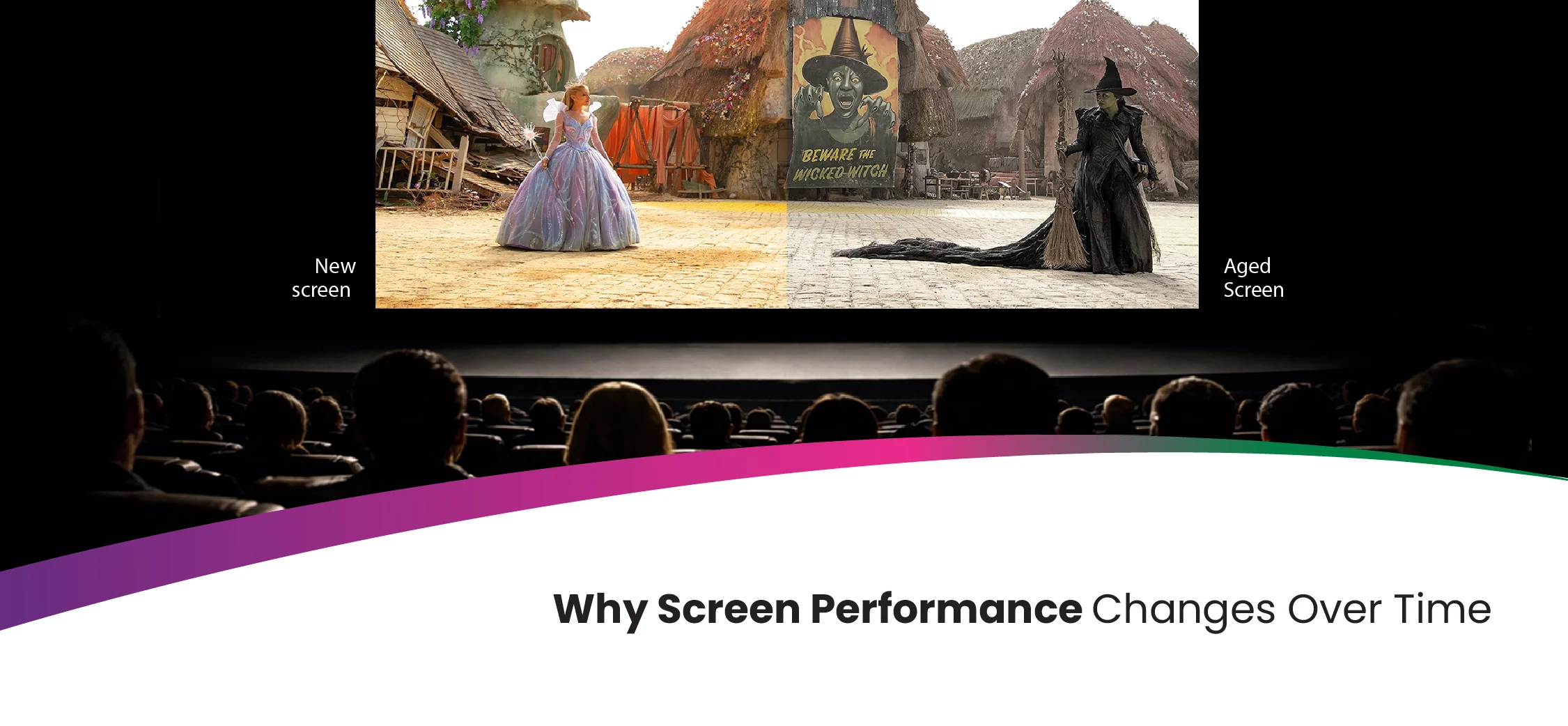
A cinema screen is more than a surface on which a movie is projected. It plays a critical role in how light is reflected, how consistently an image is presented across the auditorium, and how well that performance is maintained over time.
As cinema projection technology continues to evolve, screen technology has also become increasingly sophisticated. At Galalite Screens, innovations such as Lensray™ Technology and Enduray™ Technology address two different aspects of cinema screen performance.
So, what is the difference between Lensray™ and Enduray™?
Lensray™ is an optical technology designed to optimise light distribution and reduce visual noise, while Enduray™ is a coating technology developed to reduce micro-scratching and help preserve the screen’s intended optical performance over time.
They are not competing technologies. They address different challenges — and together, they contribute to a more consistent cinema viewing experience.
What Is Lensray™ Technology?
Lensray™ Technology is Galalite’s proprietary optical innovation designed to improve how projected light is distributed across a cinema screen.
The technology uses a sophisticated microlens array to optimise light diffusion, helping reduce interference patterns, hotspots and uneven brightness across the screen. This can contribute to more consistent image presentation from the centre of the screen to its edges.
The result is designed to support:
- Centre-to-edge brightness uniformity
- Wider viewing angles
- Better light distribution
- Reduced visual noise
- Vivid and accurate colours
- Clearer, more lifelike visuals
Lensray™ can provide up to 20% better light distribution, helping create a more consistent image across the screen.
Why Does Light Distribution Matter in a Cinema?
A cinema auditorium has viewers sitting at different positions and viewing angles. If projected light is not distributed effectively, some areas of the screen can appear brighter than others, while hotspots or uneven illumination can become distracting.
Lensray™ is designed to address these optical challenges by helping distribute light more evenly.
This matters because a cinema experience is not created for only the person sitting in the centre seat. The objective is to provide a consistent and immersive picture for audiences across the auditorium.
What Is Enduray™ Technology?
While Lensray™ focuses on the optical behaviour of the screen, Enduray™ Technology focuses on the durability of the screen coating.
Screen gain plays an important role in determining how projected light is reflected towards the audience. Although gain is generally measured when a screen is new, the physical condition of the screen coating can influence how consistently that performance is maintained over time.
During installation, handling, cleaning and routine cinema maintenance, the screen surface can come into contact with materials or objects that may create microscopic scratches.
An individual micro-scratch may not be immediately visible to the audience. However, the accumulation of micro-scratches can affect the integrity of the reflective coating and, over time, contribute to changes in gain, brightness and optical uniformity.
Enduray™ Technology has been developed to make the cinema screen coating more resistant to this form of surface damage.
By reducing micro-scratching, Enduray™ helps Digilite screen surfaces preserve their intended gain characteristics and maintain more consistent optical performance after installation.
Why Does Screen Coating Durability Matter?
A cinema screen is handled during installation and continues to be cleaned and maintained throughout its operational life.
This means screen performance should not only be considered at the point of installation.
The condition of the screen surface can also influence how consistently the screen performs as it is used and maintained.
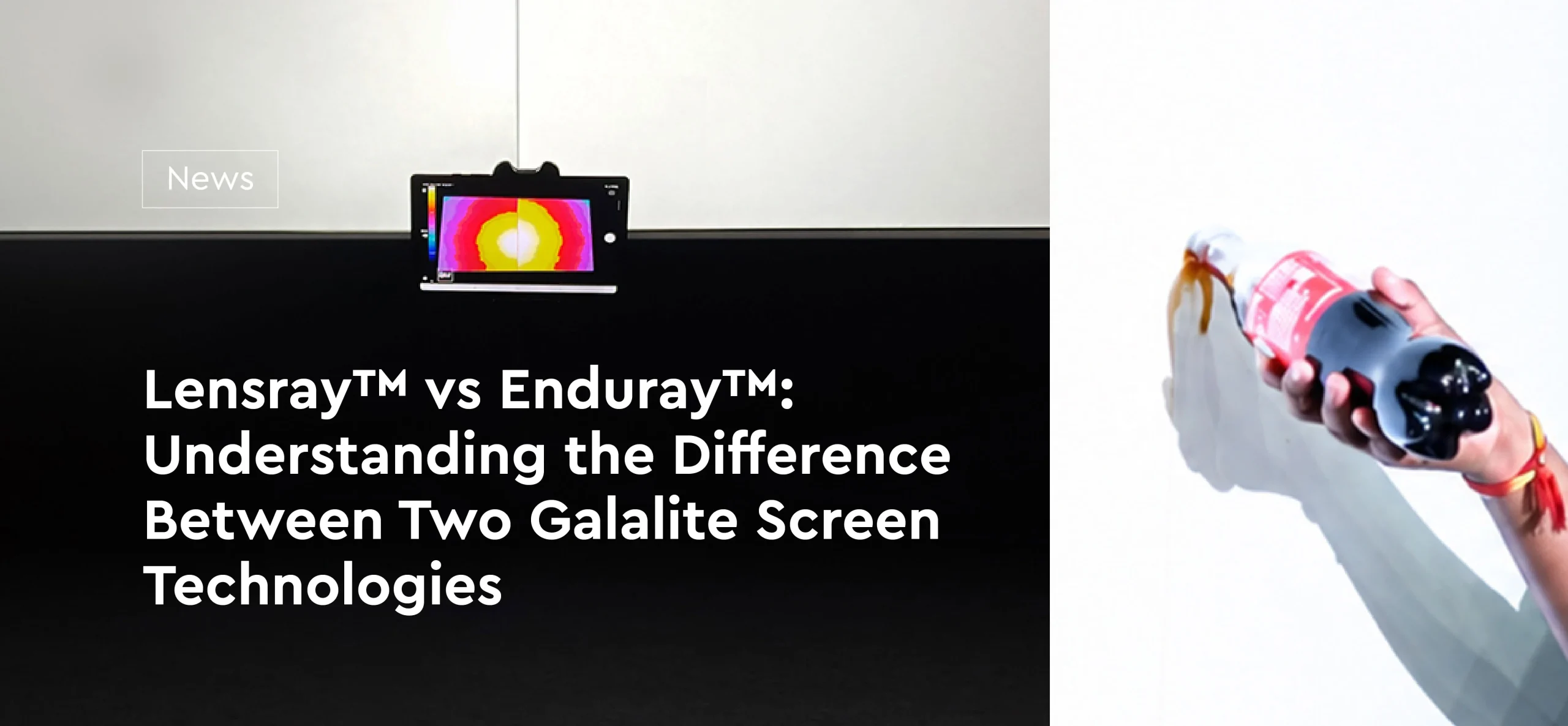
Enduray™ addresses this aspect by helping protect the coating against micro-scratching, stains and cleaning-related surface damage.
For cinema owners and exhibitors, this means a greater focus on performance retention — helping the screen maintain its intended optical characteristics for longer.
Lensray™ vs Enduray™: What Is the Difference?
The simplest way to understand the difference is to look at the problem each technology is designed to address.
| Lensray™ Technology | Enduray™ Technology |
|---|---|
| Focuses on optical performance | Focuses on coating durability |
| Optimises light distribution | Helps protect the screen surface |
| Reduces visual noise and hotspots | Reduces micro-scratching |
| Supports brightness uniformity | Helps preserve intended gain characteristics |
| Supports wider viewing angles | Helps withstand handling and cleaning-related surface damage |
| Designed to improve the image presented to the audience | Designed to help maintain screen performance over time |
In simple terms: Lensray™ helps optimise how the screen performs. Enduray™ helps protect that performance.
How Lensray™ and Enduray™ Work Together
The real value of these technologies becomes clearer when we look at the complete life of a cinema screen.
A screen needs to deliver the right optical characteristics when it is installed. But it also needs to maintain those characteristics as it goes through years of handling, cleaning and routine cinema operations.
This is where Lensray™ and Enduray™ complement each other.
Lensray™: Optimising the Image
Lensray™ is designed to optimise the distribution of projected light across the screen. By supporting centre-to-edge brightness uniformity, wider viewing angles and improved light distribution, it contributes to a more consistent visual presentation for audiences.
Enduray™: Helping Preserve the Performance
Enduray™ focuses on the physical condition of the screen coating. By reducing micro-scratching and helping protect against surface damage caused by handling, cleaning and maintenance, it helps the screen preserve its intended gain characteristics and optical consistency over time.
Together: Performance + Performance Retention
This creates a more complete approach to cinema screen performance.
Lensray™ helps deliver the optical characteristics that contribute to a better image, while Enduray™ helps protect those characteristics as the screen continues to be used and maintained.
For the audience, that can translate into a more consistent visual experience — not just when a screen is new, but throughout its operational life.
The goal is simple:
A screen should not perform at its best only on the day it is installed. It should continue to deliver consistent optical performance as the cinema operates day after day.
Enduray™ Technology Across the Digilite Range
Galalite has introduced Enduray™ Technology across its Digilite cinema screen range, including:
- Digilite 1.4
- Digilite 1.8
- Digilite 2.2
The technology combines the established optical characteristics of the respective Digilite cinema screen surfaces with improved resistance to stains, cleaning-related damage and micro-scratching.
This makes Enduray™ particularly relevant to cinemas where regular maintenance and cleaning are part of everyday operations.
Why Cinema Screen Gain Matters
Screen gain is an important consideration when evaluating cinema projection performance.
In simple terms, gain describes how much light a projection screen reflects towards the audience compared with a reference surface.
However, gain is not the only factor that determines the viewing experience.
A cinema screen also needs to provide appropriate light distribution, brightness uniformity and viewing characteristics for the auditorium in which it is installed.
Galalite uses cumulative gain measurement across multiple areas of the screen to help evaluate screen performance more comprehensively. This approach recognises that a screen is viewed by audiences from different positions rather than from a single central point.
This is also why optical technologies such as Lensray™ and coating technologies such as Enduray™ have different but complementary roles.
From Day One to Long-Term Performance
Cinema screen performance is not simply about achieving a particular specification at the time of installation.
There are two questions that cinema owners should consider:
How does the screen perform when it is installed?
And: How consistently can it maintain that performance as it is handled, cleaned and used?
Lensray™ addresses the first part by optimising light distribution and reducing visual disturbances such as hotspots and uneven brightness.
Enduray™ addresses an important part of the second by helping protect the coating against micro-scratching and surface damage that can occur during the screen’s operational life.
Together, they represent two complementary approaches to screen engineering:
Optical performance and performance retention.
A Better Cinema Experience Starts With the Screen
Projector technology continues to advance rapidly, from digital projection to modern laser systems. But the projected image ultimately has to interact with a physical screen surface before it reaches the viewer.
That makes the screen an important part of the complete projection system.
Lensray™ Technology is designed to help audiences experience a more uniform and visually consistent image by optimising light distribution and reducing visual noise.
Enduray™ Technology is designed to help the screen retain its intended optical characteristics by reducing the impact of micro-scratching and surface damage.
One focuses on how light is presented. The other focuses on helping preserve the surface that presents it.
Together, they support Galalite’s broader approach to cinema screen engineering — developing technologies that consider not only the image audiences see, but also the consistency of screen performance over time.
Lensray™ + Enduray™: Designed for Better Performance. Built for Consistency.
A great cinema experience depends on more than brightness alone.
It depends on how evenly the image is presented, how effectively projected light is distributed, how the screen performs from different viewing positions, and how consistently those characteristics can be maintained over time.
Lensray™ Technology helps optimise the visual performance of the screen. Enduray™ Technology helps protect that performance.
Together, they help Galalite screens deliver a more consistent visual experience — from the first screening to the many screenings that follow.
Don’t Compromise. Upgrade to Galalite.
Frequently Asked Questions
Related articles