The cinema industry is in the middle of its biggest projection technology shift since the transition from film to digital. Laser projection is replacing xenon lamp-based systems worldwide — and for cinema owners, the decision of when to upgrade, and which screen to pair with it, has never been more important.
This guide compares laser cinema projection with traditional xenon-lamp projection across the metrics that matter most to cinema owners and operators.
1. The Core Difference — Light Source
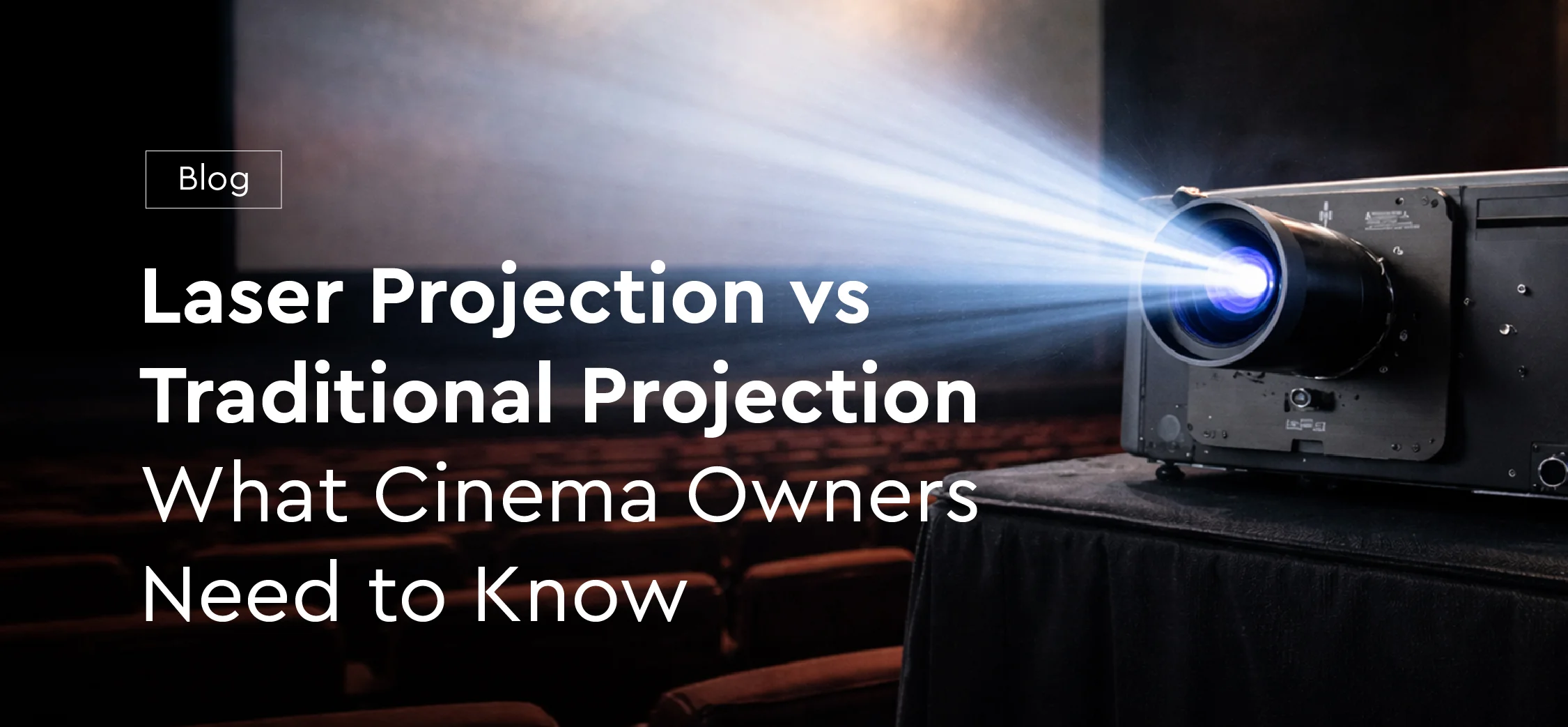
Traditional digital cinema projectors use a xenon arc lamp to generate light. The lamp is a sealed arc of xenon gas that produces broad-spectrum white light, which is then filtered through the projector’s DLP or LCOS chip to create the image.
Laser projectors replace the xenon lamp with one of two laser configurations:
- Blue laser (phosphor) systems use a single blue laser array to excite a yellow phosphor wheel, producing white light similar in principle to xenon.
- RGB laser systems use three separate laser arrays — red, green, and blue — to create colour directly, without a phosphor conversion stage. This is the most advanced configuration available.
Galalite Milestone
Galalite Screens developed India’s first RGB laser-compatible projection screen — Mirage XDL — engineered specifically for the demands of RGB laser light sources. No other manufacturer in India offers a comparable product.
2. Brightness and Colour Volume
| Metric | Xenon Lamp Projection | RGB Laser Projection |
|---|---|---|
| Peak brightness | 14–30 fL (footlamberts) | 20–60 fL (up to 4x brighter) |
| Colour gamut | ~85% of DCI P3 | Up to 100% of DCI P3 + beyond Rec.2020 |
| Black level / contrast | Moderate (~2000:1) | High (up to 10,000:1 native) |
| Brightness consistency | Degrades over lamp life | Consistent over 20,000+ hours |
| HDR capability | Limited | Full HDR10 / Dolby Vision compatible |
3. Operating Costs
Xenon lamps have a rated life of 1,500–3,000 hours and cost between $1,500–$5,000 per replacement. For a multiplex running 4,000+ hours per year, lamp costs are a significant operational expense.
Laser light sources are rated for 20,000–30,000 hours with no lamp replacement required. The total cost of ownership advantage over a 10-year cinema life cycle is substantial, often offsetting the higher upfront investment within 3–5 years.
4. Screen Requirements — Critical for Laser
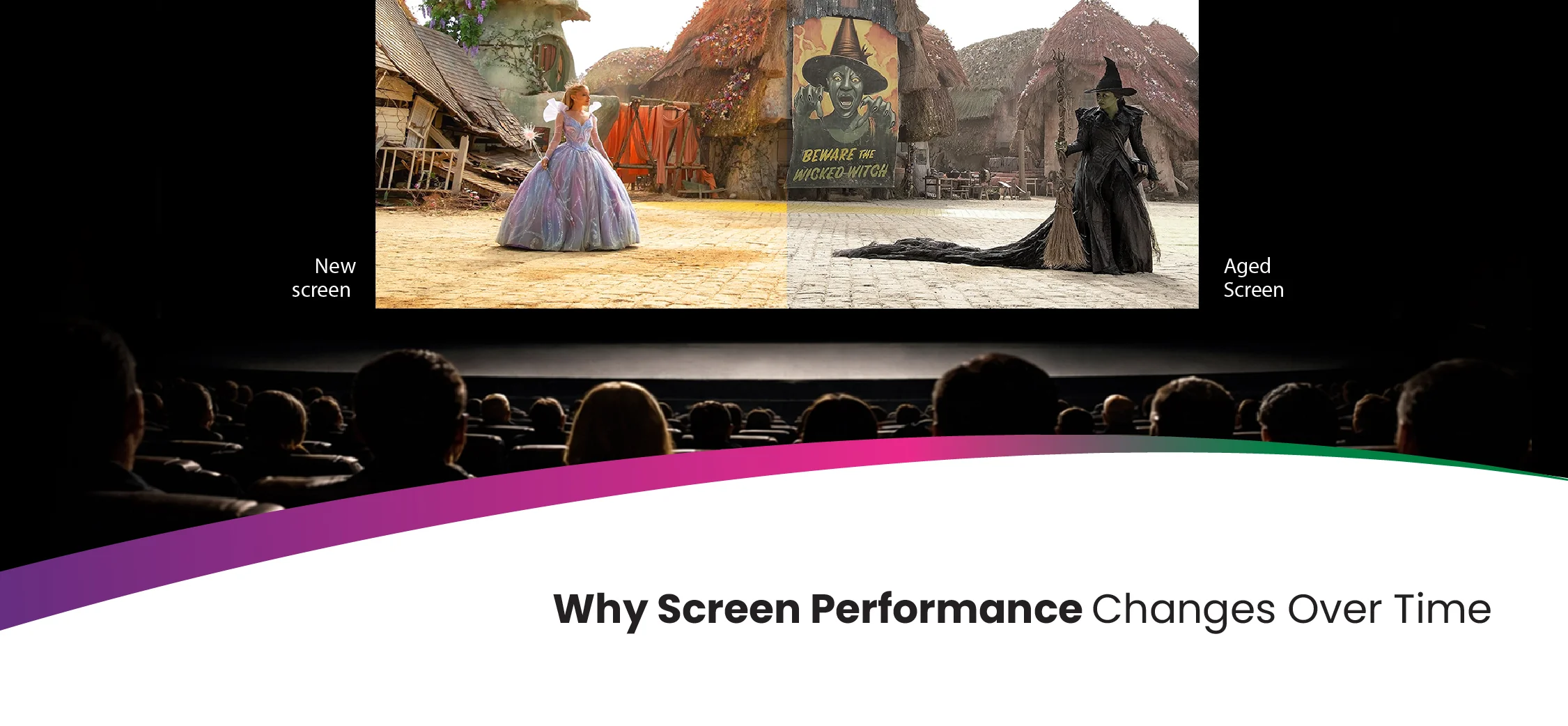
This is the most overlooked aspect of laser projection upgrades. Laser projectors — particularly RGB laser — produce a spectrally different light output from xenon. A screen designed for xenon may not reflect laser light optimally, resulting in:
- Visible speckle patterns caused by laser coherence
- Colour inaccuracies due to surface coating spectral response
- Reduced brightness efficiency, undermining the laser investment
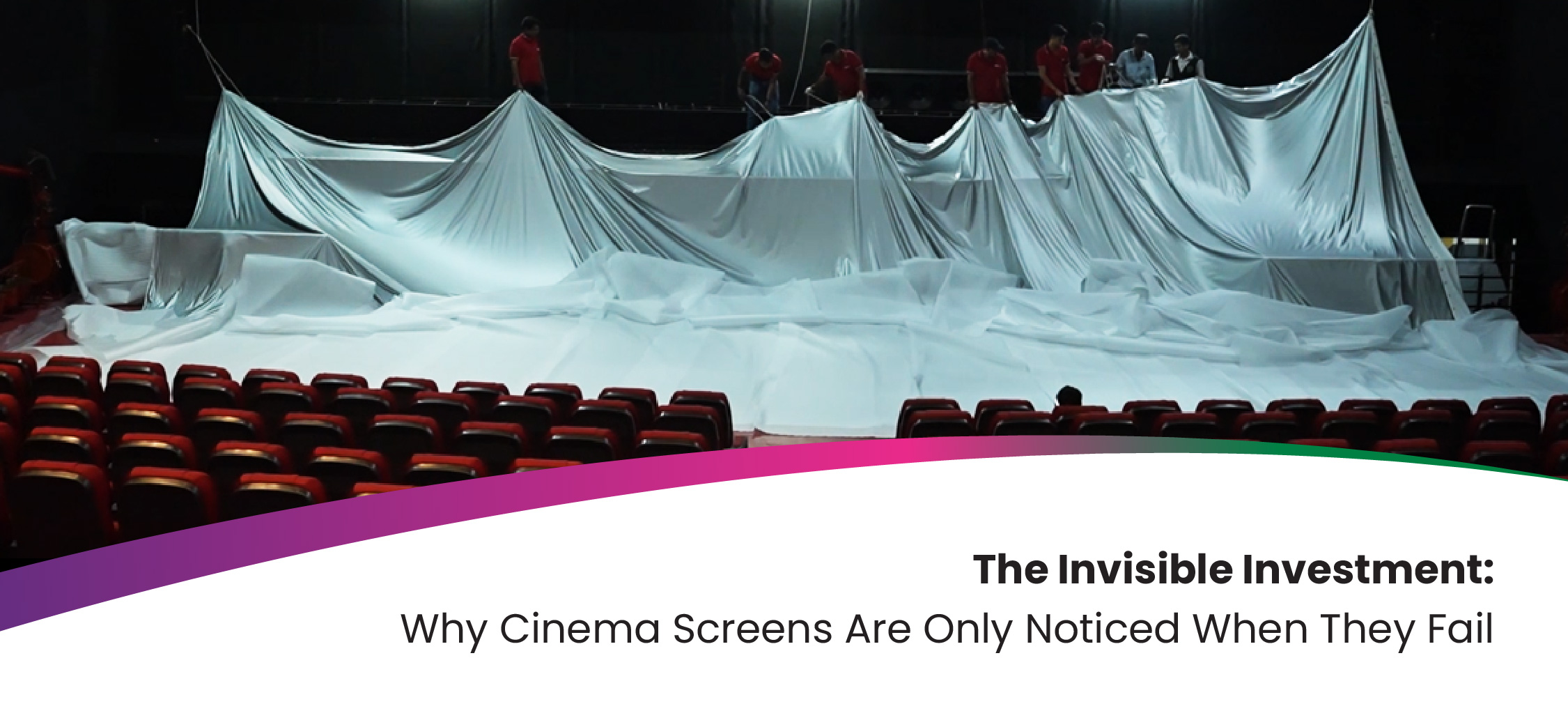
Galalite’s Mirage XDL and Mirage screen range are engineered to work with laser projection systems, with anti-speckle surface properties, broadband laser spectral compatibility, and gain profiles calibrated for laser brightness output.
5. Which Screen for Which Laser System?
| Projection Type | Recommended Galalite Screen | Why |
|---|---|---|
| Blue laser (phosphor) | Mirage / Digilite | Optimised for high-brightness digital projection |
| RGB laser (standard) | Mirage XDL / Mirage | Laser-compatible coating, anti-speckle |
| RGB laser (PLF/premium) | Mirage XDL | Maximum brightness, HDR, premium format |
| Laser + passive 3D | Prism 3D | High-gain silver for 3D brightness retention |
6. Is Now the Right Time to Upgrade?
The major projector manufacturers — Barco, Christie, NEC, Sony — have all announced end-of-life timelines for xenon lamp projectors. The global shift to laser is not a question of if, but when. Cinema owners who plan their screen upgrade alongside their projector upgrade will achieve the best image quality and total cost of ownership.
Galalite provides technical consultation for cinema owners transitioning to laser projection, ensuring the correct screen surface, gain profile, and installation configuration for every auditorium.
Frequently Asked Questions
Conclusion
Laser cinema projection represents the biggest performance leap in commercial cinema since the move to digital. For cinema owners planning upgrades, the screen is as critical as the projector — and choosing a laser-ready screen from Galalite ensures the full benefit of the investment is realised.
Planning a laser projector upgrade?
Speak with Galalite’s technical team about which screen is right for your system. Visit galalitescreens.com/contact-us
Related articles